YOUR CART
IS EMPTY
IS EMPTY

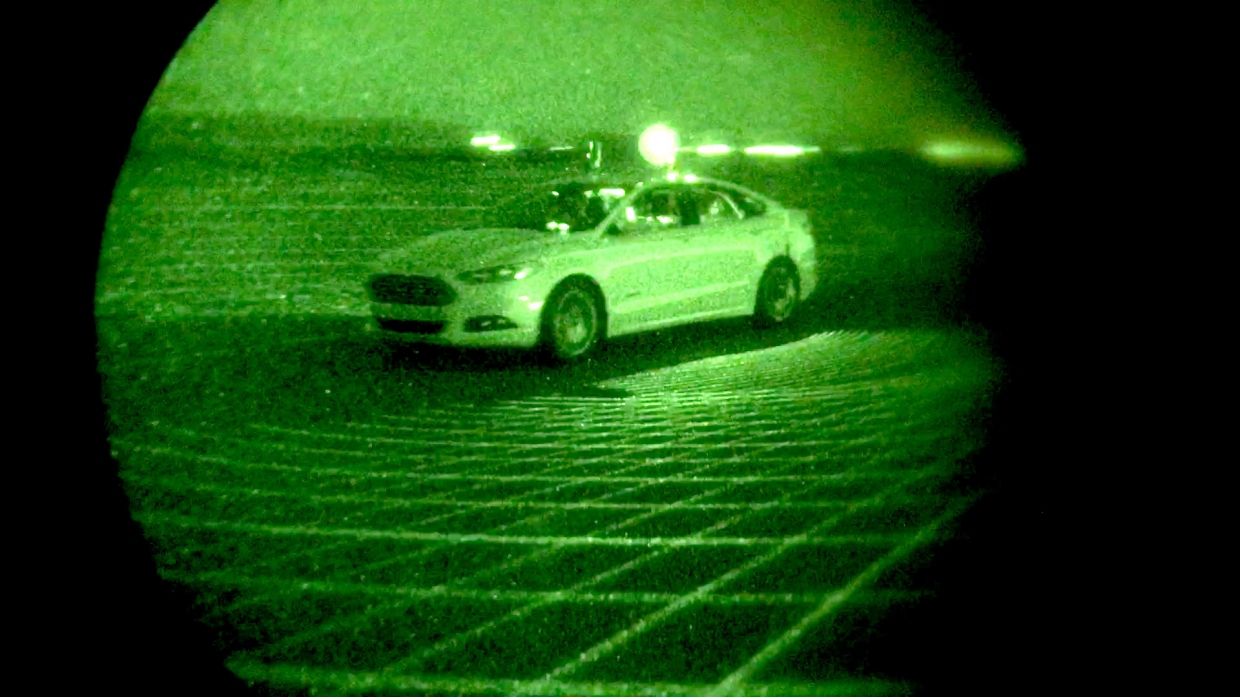
The Ford Fusion Hybrid self-driving car drove on an open desert road at night without headlights, to perform a mission that would be dangerous for human drivers.
Ford tested the Ford Fusion Hybrid self-driving car in complete darkness at night as part of its LiDAR sensor development. This test demonstrated the advanced capabilities of self-driving cars, surpassing human drivers. The latest test at Ford's Arizona Proving Ground showed that Ford uses LiDAR sensor technology in conjunction with 3D maps to enable the vehicle to drive in the dark even without headlights.
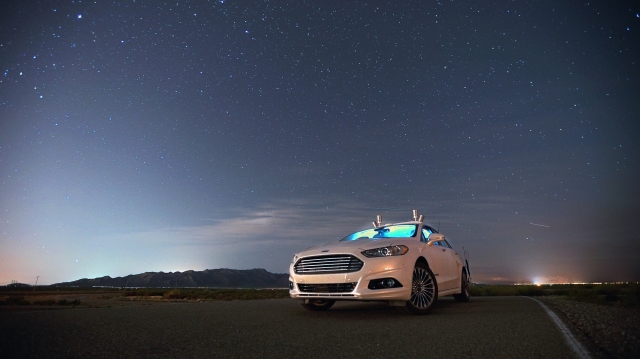
The test is part of Ford's Smart Mobility plan, which aims to become a leader in connectivity, mobility, autonomous vehicles, customer experience enhancement, as well as data management and analytics.
Wittmann, Arizona – Recently, a Ford Fusion Hybrid self-driving car drove on an open desert road at night without headlights, to perform a mission that would be dangerous for human drivers.
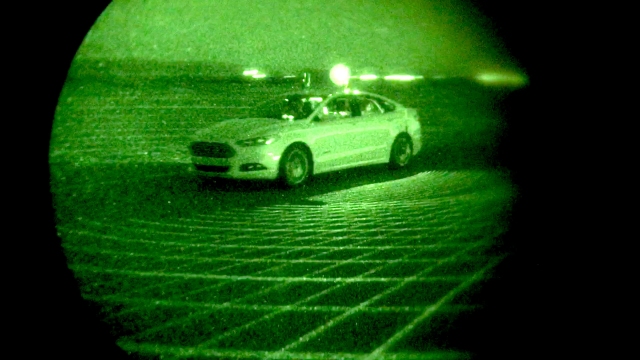
The test drive in complete darkness at Ford's Arizona Proving Ground marks another significant step for Ford in developing fully autonomous vehicles for consumers worldwide. This experiment is a crucial development; Ford's LiDAR sensors, working with virtual driver software, are precise enough to flawlessly drive the car on winding roads, even without cameras which rely on light. Although the optimal performance comes from the combination of all three sensor modes—radar, cameras, and LiDAR sensors—LiDAR alone can operate independently on the road without needing light.
Data from the National Highway Traffic Safety Administration (NHTSA) of the United States found that the fatality rate for drivers at night is approximately 3 times higher than during the daytime.
“By using LiDAR sensors, the test vehicles no longer rely on sunlight or even cameras to detect white lane lines. Additionally, LiDAR sensors enable autonomous vehicles to drive as well at night as they do during the day,” said Jim McBride, Ford's technical lead for autonomous vehicles.
To navigate in darkness, Ford's autonomous vehicles use high-resolution 3D maps that come with comprehensive road information, including lane markings, topography, mapping, and landmarks such as road signs, buildings, and trees. The vehicle uses waves from its LiDAR sensors to pinpoint its real-time location on the map, then combines this data with radar information to complete the autonomous vehicle's detection capabilities.
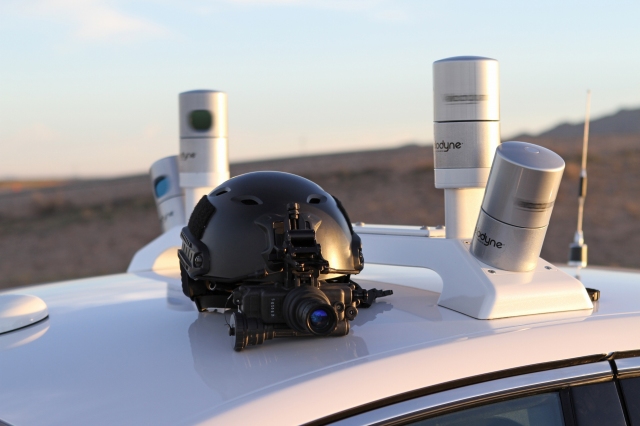
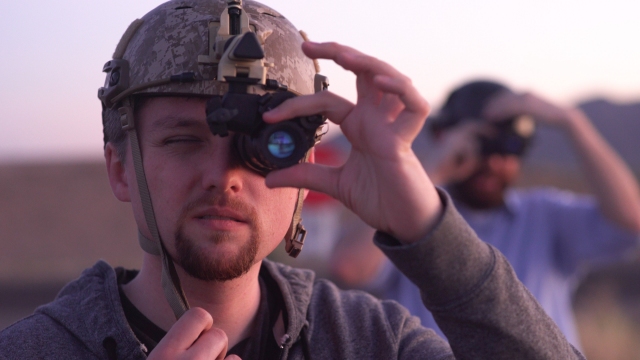
For this night desert driving test, Ford's engineering team wore night-vision goggles and observed the Ford Fusion from both outside and inside the vehicle. These goggles allowed them to see the LiDAR sensors' operation in the form of an infrared laser grid emitted around the vehicle as it moved. The LiDAR sensors emit 2.8 million laser points per second to precisely scan the environment.
“Sitting in the car, I could feel it moving, but looking out the window, all I saw was darkness,” described Wayne Williams, a research scientist and engineer at Ford. “While sitting in the back seat, I monitored the car's real-time driving process using a computer. And certainly, the car could drive precisely even on winding roads.”
After more than a decade of research into autonomous vehicles, Ford is committed to developing highly capable autonomous vehicles that do not require driver control, to meet the Level 4 standard set by the Society of Automotive Engineers International, or SAE International Level 4.
This year, Ford will triple the number of autonomous vehicles for testing, bringing 30 Ford Fusion Hybrid autonomous cars to test on roads in California, Arizona, and Michigan.
This development is part of Ford's Smart Mobility plan, which aims to take connectivity, mobility, autonomous vehicles, customer experience enhancement, as well as data management and analytics to the next level.


Follow Motor Expo Club Network